How Much Do Piano Lessons Cost in Minneapolis? A Twin Cities Parent’s Guide
Contact Us for a Free Trial Lesson
〰️
Contact Us for a Free Trial Lesson 〰️
For most families comparing private piano lessons in Minneapolis, I think about $45 to $60 for a 30-minute lesson is a reasonable range to expect for high-quality instruction.
But if you spend even ten minutes searching online, you will quickly realize that piano lesson prices are all over the place.
I have seen teachers advertise lessons for extremely low rates—even around $17 an hour—while other instructors and music schools charge $60 or more for half an hour.
That is a huge difference for what, at first glance, appears to be the same service.
And for parents who are not musicians themselves, which is true for many families looking for lessons for their children, it can be difficult to know what any of these prices actually mean.
Is a $30 piano lesson a great deal?
Is a $60 lesson twice as good?
At what point are you paying too little and potentially sacrificing quality? And at what point are you simply overpaying?
After years of teaching piano, working with families, hiring instructors, and running a music school, I have come to believe that price matters—but understanding what is behind the price matters much more.
How Much Should Piano Lessons Cost in Minneapolis?
If you are looking for professional private piano lessons in Minneapolis, I personally think $45 to $60 for a 30-minute lesson is a reasonable range to begin your search.
That doesn't mean every lesson below $45 is poor quality.
It also doesn't mean every lesson above $60 is overpriced.
There are always exceptions.
What I would pay attention to is how far the price moves away from the general range—and whether there is a good explanation for it.
If one music school charges $50 for a private 30-minute lesson and another charges $30, I wouldn't automatically assume the $30 school is worse.
But I would want to know why the difference exists.
And if another instructor charges $70 for the same amount of lesson time, I would ask the same question in the other direction:
What am I receiving that makes this lesson worth considerably more?
That question is much more useful than simply looking for the cheapest option.
Why Can Two 30-Minute Piano Lessons Cost So Differently?
"Piano lesson" sounds like a very simple service.
A teacher sits at a piano with a student for 30 minutes.
But what happens during those 30 minutes—and everything happening around them—can be completely different from one teacher or school to another.
Price can be affected by:
the teacher's education and musical background
how long they have been teaching
their experience specifically with children
whether lessons take place in a studio or the student's home
travel time
whether the teacher works independently or through a music school
recital and performance opportunities
administrative support
scheduling and communication
the school's location and expenses
whether trial lessons are offered
what happens if the first teacher isn't the right match
This is why I don't think parents should compare piano teachers the same way they might compare the price of two identical products.
You aren't buying the same box from two different stores.
You are choosing a person who may be teaching your child every week for years.
Cheap Piano Lessons Can Be a Great Value—But Ask Why They Are Cheap
I want to be careful about this because inexpensive does not mean bad.
There are wonderful teachers who charge less than other instructors around them. A newer teacher may be building a studio. Someone may have unusually low business expenses. An independent instructor may simply prefer to keep their rates lower.
There can be perfectly reasonable explanations.
But when I see a music school charging dramatically less than nearly everyone around it, I think it is fair to ask how that price is possible.
A music school has expenses.
Teachers need to be compensated.
Someone has to find students, communicate with families, send invoices, manage scheduling, advertise the school, maintain the website, organize recitals, reserve performance spaces, answer questions, handle cancellations, and take care of all the other small things families hopefully never have to think about.
That money has to come from somewhere.
So if you find a 30-minute lesson for $30 while several other schools around it charge closer to $45, $50, or $60, don't assume you discovered the exact same service at half the price.
Maybe you did.
But ask questions first.
Who is the instructor?
How much teaching experience do they have?
Are recitals included?
Are there registration or recital fees added later?
Does the school offer trial lessons?
How easy is it to communicate with someone when you have a problem?
What happens if your child and the teacher aren't a good match?
The goal isn't to distrust an inexpensive teacher.
The goal is to understand what you are paying for before price becomes the deciding factor.
Independent Piano Teachers and Music Schools Are Not the Same Business Model
This is one of the most important things I wish more parents understood about piano lesson pricing.
An independent piano teacher keeps the tuition paid by the family, but that teacher is also responsible for running the entire business.
They may have to advertise, find students, answer inquiries, manage their website, create invoices, collect payments, handle schedules, organize recitals, rent recital venues, purchase insurance, communicate with parents, and deal with the countless administrative tasks involved in maintaining a private studio.
When an instructor teaches through a music school, many of those responsibilities move to the school.
The teacher can spend much more of their working time doing what they were hired to do:
teach.
In return, the school keeps a portion of the tuition.
Exactly how much varies from school to school, so I don't think it is responsible to pretend there is one percentage that applies everywhere.
But it is important for families to understand that if a music school charges $50 for a lesson, the instructor is not simply putting the entire $50 in their pocket.
Part of that tuition pays the teacher. Another part supports everything the school provides around the lesson.
This becomes especially important when evaluating extremely inexpensive music schools.
If the total lesson price is already very low, the amount available to compensate the instructor becomes even lower after the school's expenses are considered.
And that leads me to a question I think parents are allowed to ask:
If qualified instructors throughout the same area have opportunities to earn considerably more, what allows this particular school to consistently attract and retain excellent teachers at a much lower lesson price?
There may be a good answer.
But it is worth asking.
More Expensive Does Not Automatically Mean Better
Everything I just said works in the other direction too.
I don't believe families should assume that the most expensive piano teacher must be the best one.
As a music school owner, I have had the opportunity to work with highly educated musicians, including instructors with advanced university training and doctoral-level education.
Those experiences have actually made me less interested in judging a teacher only by the degrees listed after their name.
Academic training is valuable.
Musical ability is valuable.
Experience is valuable.
But none of them automatically justify an unlimited price.
And more importantly, being a highly accomplished musician does not automatically make someone an extraordinary teacher for your seven-year-old.
Teaching children requires another set of skills entirely.
Patience.
Communication.
Adaptability.
Consistency.
Knowing when to challenge a student and when to slow down.
Knowing how to explain the same idea three different ways when the first two aren't working.
And perhaps most importantly, knowing how to build a relationship in which a child feels comfortable learning.
That is why I would never select a piano teacher based only on price or credentials.
If you are currently comparing instructors, I go much deeper into this subject in How to Choose the Right Piano Teacher for Your Child.
Remember: Piano Lessons Can Last for Years
One reason I care so much about reasonable pricing is that piano lessons aren't usually a one-month purchase.
They can become part of a family's life for years.
I have worked with students who began piano when they were only three or four years old and were still taking lessons years later at nine or ten.
When you think about lessons that way, small differences in weekly pricing become much more significant.
An additional $10 doesn't sound enormous when you are considering one lesson.
Over roughly 50 weekly lessons, that's about $500.
Continue for five years and that seemingly small difference can become approximately $2,500.
That doesn't mean you should choose a worse teacher to save $10.
Quite the opposite.
It means you should find a price and a teacher that you feel good about continuing with.
The cheapest lesson isn't a bargain if your child dislikes it and quits after six months.
The most expensive lesson isn't a good investment simply because it has the highest price.
For me, the best value is a lesson that combines excellent teaching with a price a family can reasonably sustain long enough for the student to truly grow.
What Should You Actually Be Paying for?
When a family pays for a private piano lesson, I think they should expect more than someone who knows how to play piano.
A Teacher Who Knows How to Teach
Playing an instrument and teaching an instrument are related skills, but they are not the same skill.
This is especially important with children.
One student may understand a concept immediately after seeing it demonstrated.
Another needs a detailed explanation.
Another understands it when the teacher turns it into a game.
Some students are naturally focused. Others need variety throughout a 30-minute lesson.
A strong teacher notices those differences and adjusts.
When families look through the instructors at Naji Piano School, I always encourage them to look at education and experience—but I also want them to think about personality and teaching style.
The best résumé in the world doesn't help much if the student dreads every Tuesday afternoon.
Reliability and Communication
This may not sound as exciting as technique or music theory, but over several years of weekly lessons, reliability becomes extremely important.
Parents should know when lessons are happening.
Questions should be answered.
Invoices should make sense.
Schedule changes should be communicated.
If there is a problem, someone should take responsibility for solving it.
These things take place outside the actual piano lesson, but they are still part of the service a family is paying for.
Opportunities to Perform
Not every student loves performing, and I don't believe a child should be forced onto a stage before they are ready.
But I do believe students should have the opportunity.
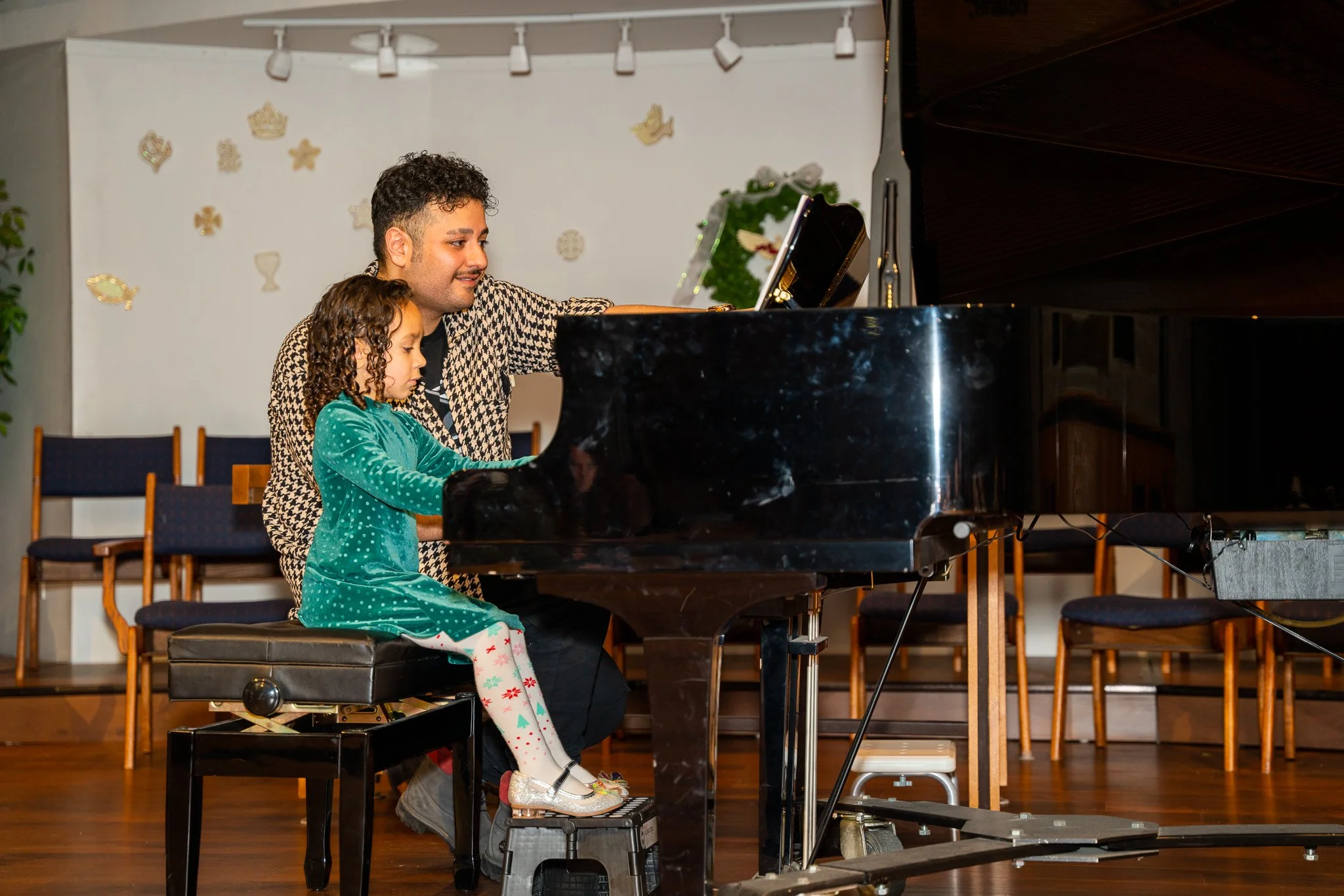
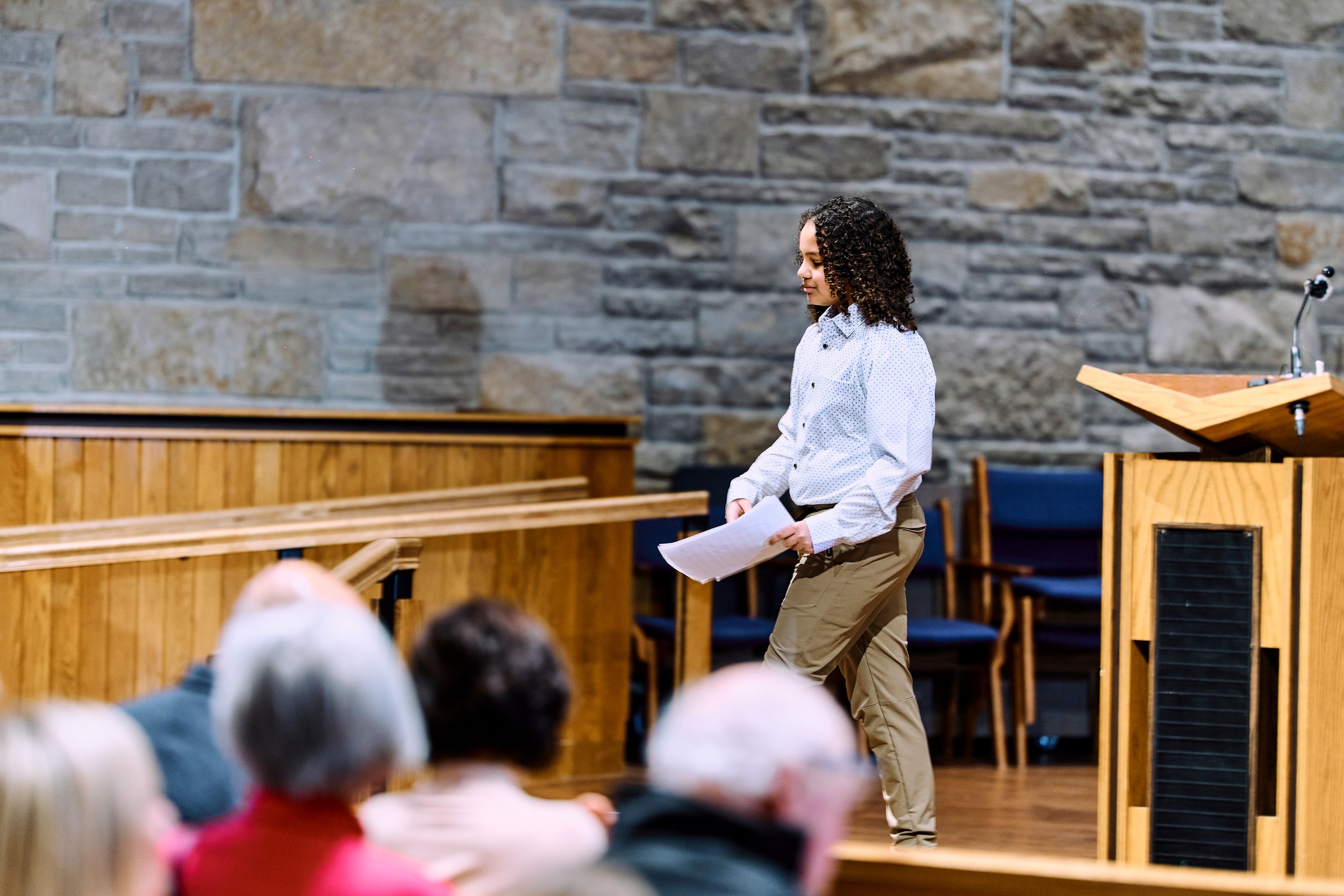
Recitals give children something concrete to work toward. They experience preparing a piece beyond simply playing it correctly during a lesson, and they get a chance to share what months or years of learning have produced.
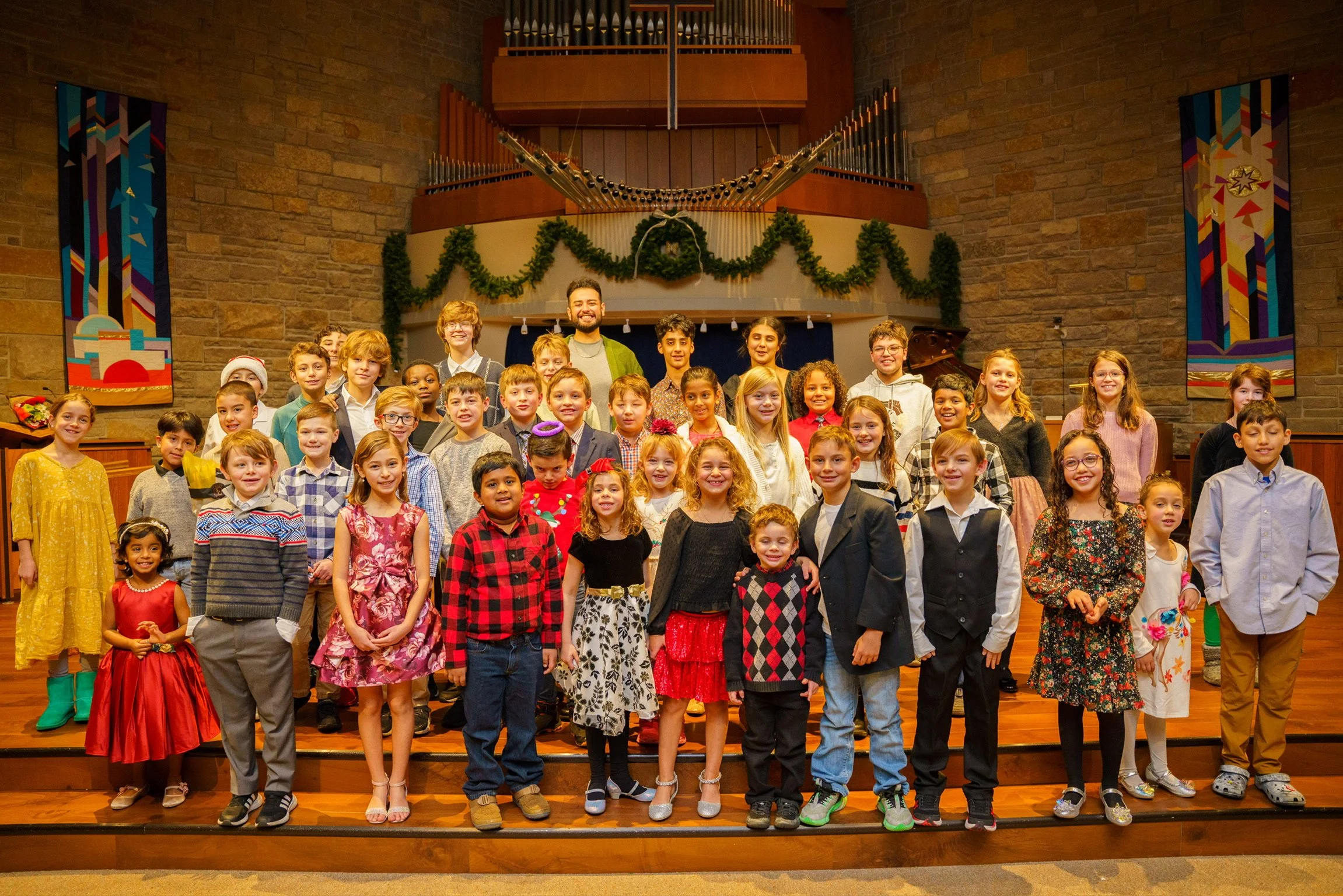
Our student recital and piano gallery shows some of the performances and milestones our students have shared over the years.
For families who value recitals, this is something worth asking about when comparing lesson prices.
The Ability to Find the Right Match
This may be the most important one.
A wonderful teacher can still be the wrong teacher for a particular child.
That isn't an insult to the instructor.
People are different.
Children are different.
Teaching styles are different.
Sometimes the connection is immediate. Sometimes it takes a few lessons. And occasionally two perfectly good people simply don't work particularly well together.
A good piano program should understand that.
Why I Strongly Believe in Free Trial Piano Lessons
If a family is considering paying for lessons every week—potentially for many years—I believe they deserve an opportunity to try the service before making that commitment.
That is one reason Naji Piano School offers a free introductory lesson.
To me, the trial isn't mainly about showing a parent how many notes we can teach their child in 30 minutes.
I think it answers a much more important question:
How does this child feel with this teacher?
Watch your child during the lesson.
Do they gradually become comfortable?
Does the teacher speak with them rather than just at them?
How does the teacher respond when the student makes a mistake?
Does your child seem interested?
And when the lesson is finished, ask something simple:
"Would you like to have another lesson with this teacher?"
Children don't need to understand teaching methodology to know whether they felt comfortable with someone.
If your family is comparing schools that require an immediate financial commitment with schools that let you meet the instructor first, I think that difference is worth considering.
You can read more about how our trials, scheduling, lesson lengths, and policies work on our piano lesson FAQ.
Do In-Home Piano Lessons Cost More?
They can, and there is a practical reason.
When an instructor teaches in a student's home, the teacher is not working only during the actual lesson.
Imagine a teacher drives 15 minutes to a student's house, teaches for 30 minutes, and then drives another 15 minutes to the next family.
That 30-minute piano lesson has occupied roughly an hour of the teacher's working time.
There is also gasoline, vehicle wear, traffic, and the challenge of arranging students geographically so the schedule actually works.
So I think it is reasonable for in-home instruction to include some value for travel.
At the same time, families receive something valuable in return: convenience.
There is no loading children into the car, driving to a school, sitting in a waiting room, and driving back home every week.
The piano teacher comes to you.
For a busy family, especially one with multiple children and activities, that can be a meaningful part of the service.
Our school offers in-home piano lessons in Bloomington and piano lessons in Richfield, as well as in-home instruction in Minneapolis. Families interested in piano lessons in Edina can also choose between in-home instruction and lessons at my Edina studio.
Whether the added convenience is worth paying for is a personal decision for each family.
How Long Should a Piano Lesson Be?
When comparing prices, make sure you are comparing the same lesson length—and don't assume longer automatically means better.
For many young beginners, 30 minutes is an excellent lesson length.
It provides enough time to work on reading, technique, rhythm, repertoire, and weekly goals without stretching the child's attention beyond what is productive.
As students become older, more advanced, or work on more demanding repertoire, 45- or 60-minute lessons can make more sense.
I would rather see a six-year-old have an excellent, focused 30-minute lesson than spend an hour at the piano simply because the longer option sounds more serious.
The right lesson length is the one that allows the student to learn effectively.
Click to Claim Your Free Trial Lesson
〰️
Click to Claim Your Free Trial Lesson 〰️
Why Naji Piano School Charges $50 for a 30-Minute Lesson
At Naji Piano School, our standard lesson rates are:
30 minutes: $50
45 minutes: $70
60 minutes: $90
I didn't choose those prices because I wanted us to be the cheapest piano school in Minneapolis.
And I didn't choose them because I wanted us to be the most expensive.
I chose them because I believe a music school has to be fair to three groups of people at the same time:
the student and family, the instructor, and the school itself.
The family needs a price that can realistically work for the long term.
The instructor needs to feel that their time, education, preparation, travel, and teaching ability are respected.
And the school needs enough revenue to advertise, find students, provide customer service, organize recitals, manage invoices and scheduling, maintain the business, support our teachers, and continue improving.
If one of those three sides is consistently being treated unfairly, I don't think the system works very well for long.
For us, $50 for 30 minutes has become the balance that makes sense.
It allows us to work with experienced instructors while keeping the cost within a range that many Twin Cities families can reasonably maintain.
Could another excellent teacher charge $45? Absolutely.
Could another excellent teacher charge $55 or $60? Of course.
I don't believe there is one magical number that determines quality.
What I do believe is that when prices move dramatically lower or higher, families should understand why.
Seven Questions I Would Ask Before Paying for Piano Lessons
If I were choosing a teacher for my own child, these are the questions I would ask before comparing prices:
Can my child try a lesson before we commit?
A trial tells you something a website never can: how the teacher and child actually interact.Who will actually be teaching my child?
Don't evaluate only the school's reputation. Learn about the individual instructor.How much experience does the teacher have working with students like my child?
Teaching a five-year-old beginner is different from teaching an advanced teenager.What is included in the price?
Ask about registration fees, books, recitals, travel fees, or other expenses beyond regular tuition.What happens if the teacher isn't a good fit?
You should know your options before you need them.How are scheduling, cancellations, and communication handled?
Small administrative problems become much bigger when they happen every week.Can we comfortably maintain this price long term?
A sustainable lesson with a great teacher is often more valuable than a program your family will need to leave because the price becomes difficult.
So, What Is a Fair Price for Piano Lessons in Minneapolis?
My personal answer is still around $45 to $60 for a professional 30-minute private piano lesson.
But I hope after reading this article, the range itself feels less important than it did at the beginning.
If you find a wonderful teacher for less, ask why the price is lower and make sure you are comfortable with the answer.
If you find a teacher charging significantly more, ask what additional value justifies the difference.
Don't choose the cheapest piano lesson simply because it is cheap.
Don't choose the most expensive one because you assume expensive means better.
Instead, look for the place where these things meet:
a qualified teacher, a genuine connection with the student, reliable service, a learning environment that works for your family, and a price you can comfortably continue paying.
That is what I consider good value in piano lessons.
The Best Way to Compare Piano Lessons Is to Experience One
You can learn a great deal from a website.
You can read teacher biographies, compare prices, look through photos, read reviews, and ask questions.
But eventually, someone has to sit down at the piano.
That is when you begin to learn whether the teacher is actually right for you or your child.
If you're considering piano lessons in Minneapolis, Edina, Bloomington, or Richfield, you can contact Naji Piano School to schedule a free introductory lesson.
There is no obligation to continue afterward.
Meet the teacher.
Let your child experience the lesson.
See how the interaction feels.
Then decide whether the teaching, the experience, and the price make sense for your family.
I think that is a much better way to choose piano lessons than simply sorting your options from cheapest to most expensive.