How to Choose the Right Piano Teacher for Your Child
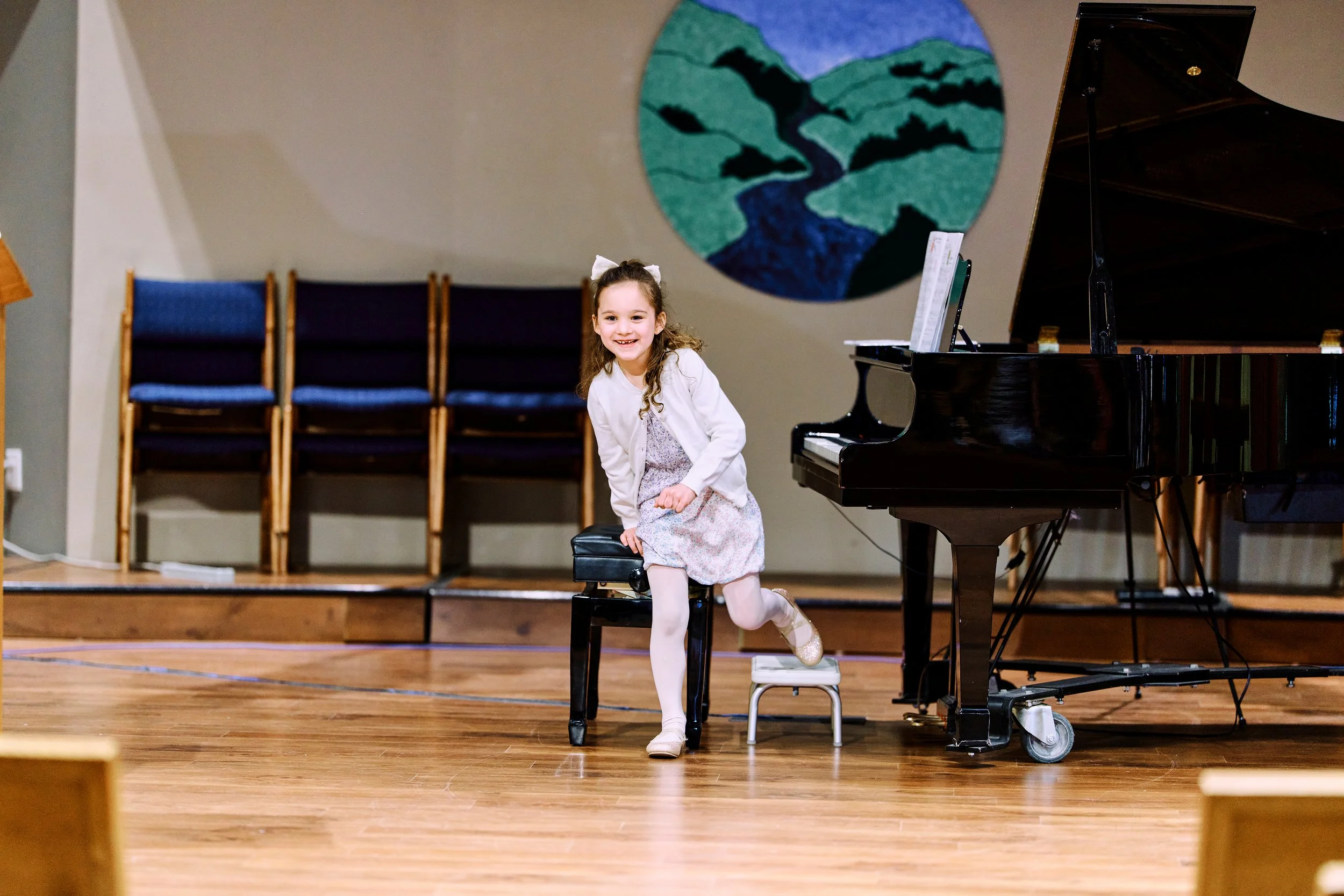
Choosing the right piano teacher for your child is about much more than finding the person with the most impressive résumé.
Degrees matter. Experience matters. Musical ability certainly matters.
But after years of teaching piano and working with children and families, I have come to believe that parents should look at something else first:
Can my child trust this teacher and enjoy learning from them?
A teacher can have an advanced music degree and be an extraordinary pianist. But if your child doesn't feel comfortable asking questions, making mistakes, or simply being themselves during a lesson, it becomes much harder to build the kind of relationship in which meaningful learning can happen.
The best piano teacher isn't necessarily the most accomplished pianist you can find.
It is the teacher who has the musical knowledge to teach your child well and the ability to understand the particular child sitting beside them at the piano.
Start With the Connection, Not Just the Résumé
I don't say this to minimize a teacher's education.
Parents should absolutely look at a teacher's musical training, teaching experience, piano background, and experience working with children. A qualified piano teacher should understand technique, rhythm, music reading, musical expression, and how to develop a student's skills over time.
But being an excellent pianist and being an excellent teacher are not the same skill.
Knowing how to play something beautifully does not automatically mean knowing how to explain it to an eight-year-old who doesn't understand.
Teaching children requires patience, observation, flexibility, and the ability to communicate. A good teacher has to recognize when a student needs more explanation, when they are ready for a challenge, when frustration is starting to build, and sometimes when the original teaching approach simply isn't working.
That is why I would never choose a piano teacher from a biography alone.
I would read the biography.
Then I would meet the teacher.
More importantly, I would let my child meet the teacher.
At Naji Piano School, families can meet our piano instructors and learn about their education and teaching backgrounds before getting started. But even after reading about a teacher's qualifications, I still believe the actual interaction between that teacher and the student is one of the most important parts of choosing the right fit.
Why the First Piano Lesson Matters So Much to Me
Part of this belief comes from my own childhood.
I had several piano teachers growing up.
To be completely honest, I don't vividly remember most of those lessons today. But there is one teacher I remember very clearly.
What stayed with me wasn't her résumé.
It wasn't the method book we happened to be using.
I remember her because I loved learning from her.
I trusted her. I felt comfortable around her. I enjoyed our lessons, and because I enjoyed learning from her, I wanted to listen to what she was teaching me.
Years later, when I became a piano teacher myself and eventually opened Naji Piano School, I realized how much that experience had shaped the way I think about teaching children.
It is also one of the main reasons we offer a free trial piano lesson to new students.
To me, a trial lesson isn't simply a sample of what piano lessons look like.
It gives the child, parent, and teacher a chance to answer a much more important question:
Do this child and this teacher work well together?
Sometimes the answer is yes immediately.
Sometimes a shy child needs a little more time.
And sometimes the answer is simply no.
That doesn't necessarily mean the teacher did anything wrong. It doesn't mean there is anything wrong with the student either. Two perfectly good people can simply not be the right match for one another.
If a student at Naji Piano School doesn't connect well with the first instructor they meet, we are happy to arrange another free trial lesson with a different teacher.
I would much rather help a child find the right teacher before weekly lessons begin than try to force a teacher-student relationship that isn't working.
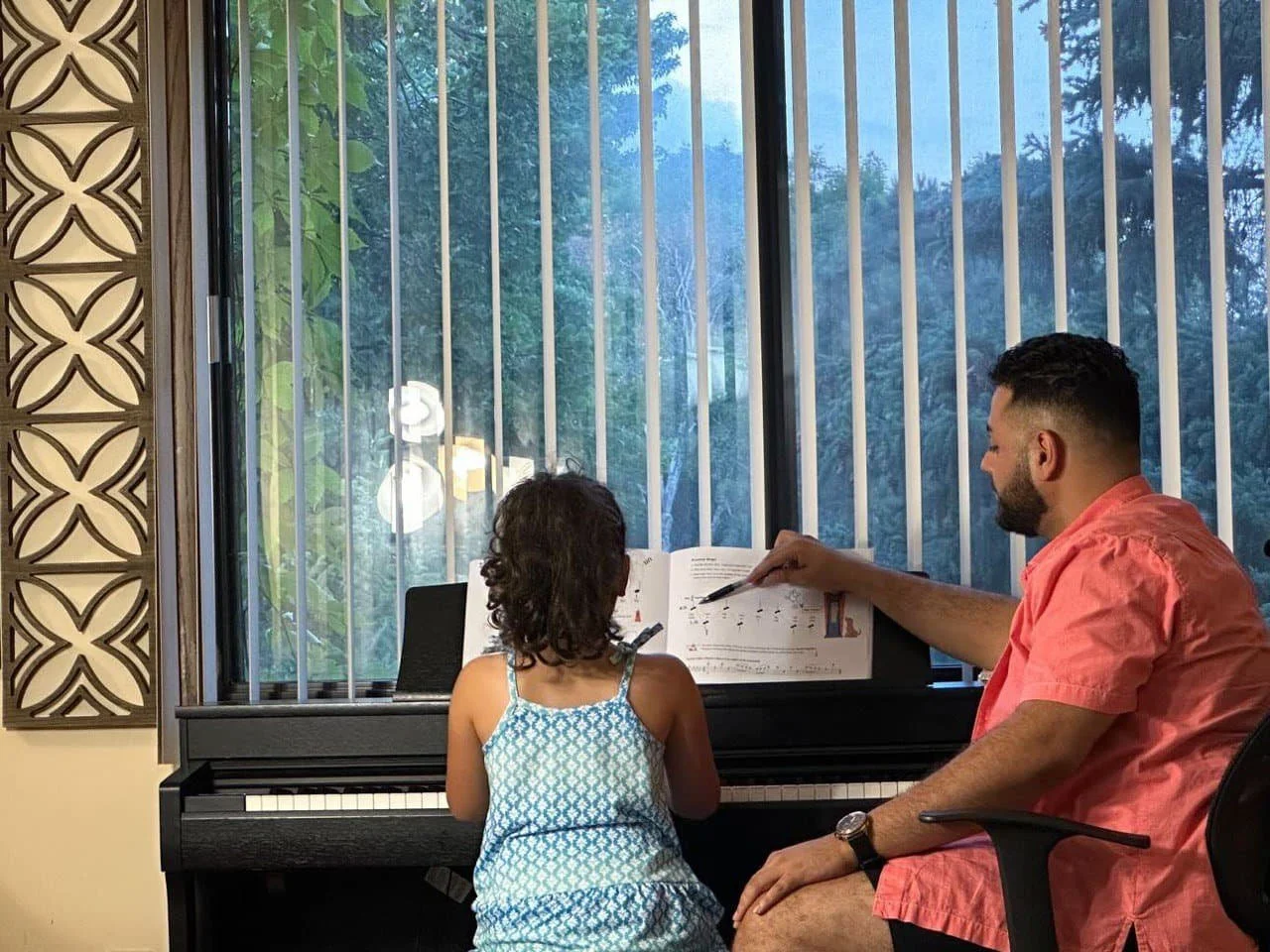
What Should Parents Watch for During a Trial Piano Lesson?
Parents sometimes evaluate a first piano lesson by asking how much their child learned in thirty minutes.
I would pay attention to something different first.
Watch the interaction.
Does the teacher speak with your child rather than simply talking at them?
Does your child gradually become more comfortable?
When your child makes a mistake, how does the teacher respond?
Does the teacher notice when something isn't making sense and try explaining it differently?
Does your child feel comfortable asking a question?
Does the teacher seem interested in who your child is, or are they simply moving through a predetermined lesson plan?
Then, after the lesson, ask your child something simple:
"How did you like your piano lesson?"
You don't need a seven-year-old to explain whether they appreciated the teacher's pedagogical approach.
Children may not always be able to explain why they connected with someone, but they can usually tell you whether they enjoyed being around that person and whether they want to go back.
Of course, some children are naturally shy. I wouldn't expect every student to form an immediate bond with a new adult.
What you are looking for at the beginning is something smaller:
the start of trust.
A Good Piano Teacher Should Adapt to Your Child
One of the qualities I value most in a piano teacher is flexibility.
Children do not all learn in the same way.
One child may understand something immediately after watching the teacher demonstrate it.
Another may need to hear an explanation several times.
Another may understand the same idea much faster if the teacher turns it into a game.
One student loves structure and enjoys moving carefully through a method book. Another becomes much more motivated when a familiar piece of music is incorporated into the lesson.
Some students need repetition.
Some need variety.
Some love being challenged.
Others need to build confidence before they are willing to take on that challenge.
Even two students who are exactly the same age and at approximately the same piano level can need very different things from their teacher.
That is why I become cautious when a teacher's philosophy is essentially:
"This is the method I use for every student."
There is nothing wrong with having a preferred teaching method or curriculum. A particular method may work wonderfully for a large number of students.
But no method works perfectly for every child.
A strong piano teacher should recognize that.
There should still be structure. Personalized instruction doesn't mean spending the entire lesson doing whatever the child feels like doing that afternoon. Students still need fundamentals, proper technique, rhythm, reading skills, musical understanding, and a clear direction.
But the way we get there can change from student to student.
A good teacher should continually be asking:
"What is going to help this particular student understand?"
That is very different from expecting every child to adapt to one predetermined teaching system.
Personalized instruction is something we emphasize in our piano lessons in Edina, whether a student studies at our Edina studio or receives lessons at home.
Pay Attention to What Happens on the Difficult Days
You probably won't learn everything you need to know about a teacher during the first lesson.
Some qualities only become visible after several weeks or months.
One of the biggest is how the teacher responds when a child is tired, distracted, discouraged, or frustrated.
Every piano student eventually has one of those days.
Maybe school was exhausting.
Maybe they didn't practice very much that week.
Maybe a piece that seemed manageable last week suddenly feels impossible.
Or maybe they're simply having a bad day for reasons that have nothing to do with the piano.
I think these moments can tell you a great deal about a teacher.
A good teacher learns when pushing a little harder will help and when it will make the situation worse.
Sometimes the right choice is to work patiently through the difficult measure together.
Sometimes it is better to put that piece aside for five minutes.
Maybe the teacher turns a concept into a small game.
Maybe they improvise together.
Maybe the student plays something they already know well so they can remember that they actually can play the piano.
Sometimes a child simply needs to hear:
"Look how far you've already come."
The goal isn't to protect students from every difficult moment.
Learning an instrument is challenging sometimes. Working through frustration is part of becoming a musician.
But there is a difference between helping a child work through a challenge and allowing one frustrating moment to take over the entire lesson.
I have always believed that even when a lesson can't become a great lesson that day, a good teacher can usually find a way to make it an okay one.
That matters.
I want a child leaving a difficult lesson thinking:
"Piano was hard today."
Not:
"I hate piano."
A Good Piano Teacher Should Communicate With Parents
The teacher-student relationship is at the center of children's piano lessons.
But the relationship between the teacher and parent matters too.
A thirty-minute piano lesson is only a small part of the student's week.
What happens during the days between lessons has a major effect on progress.
A teacher can explain an assignment perfectly during the lesson, but expecting a young child to remember every instruction several days later isn't always realistic.
That is why I value clear practice instructions.
Depending on the child, this might mean writing the assignment in a notebook, making clear notes in the music, or spending the last minute of the lesson explaining the week's priorities to the parent.
It doesn't need to become a ten-minute parent conference after every lesson.
Sometimes thirty seconds is enough:
"She did really well with rhythm today. This week we're going to focus mainly on measures 12 through 20."
Now the parent knows what happened during the lesson.
They know what their child should be working on.
And if three days later their child sits at the piano and says, "I don't remember what I'm supposed to practice," someone else has context.
For older students who are becoming more independent, the amount of parent involvement can naturally decrease.
But parents should never feel completely disconnected from their child's progress.
Families considering lessons can find answers to many practical questions about practice, scheduling, instruments, lesson structure, and recitals on our Piano Lessons FAQ.
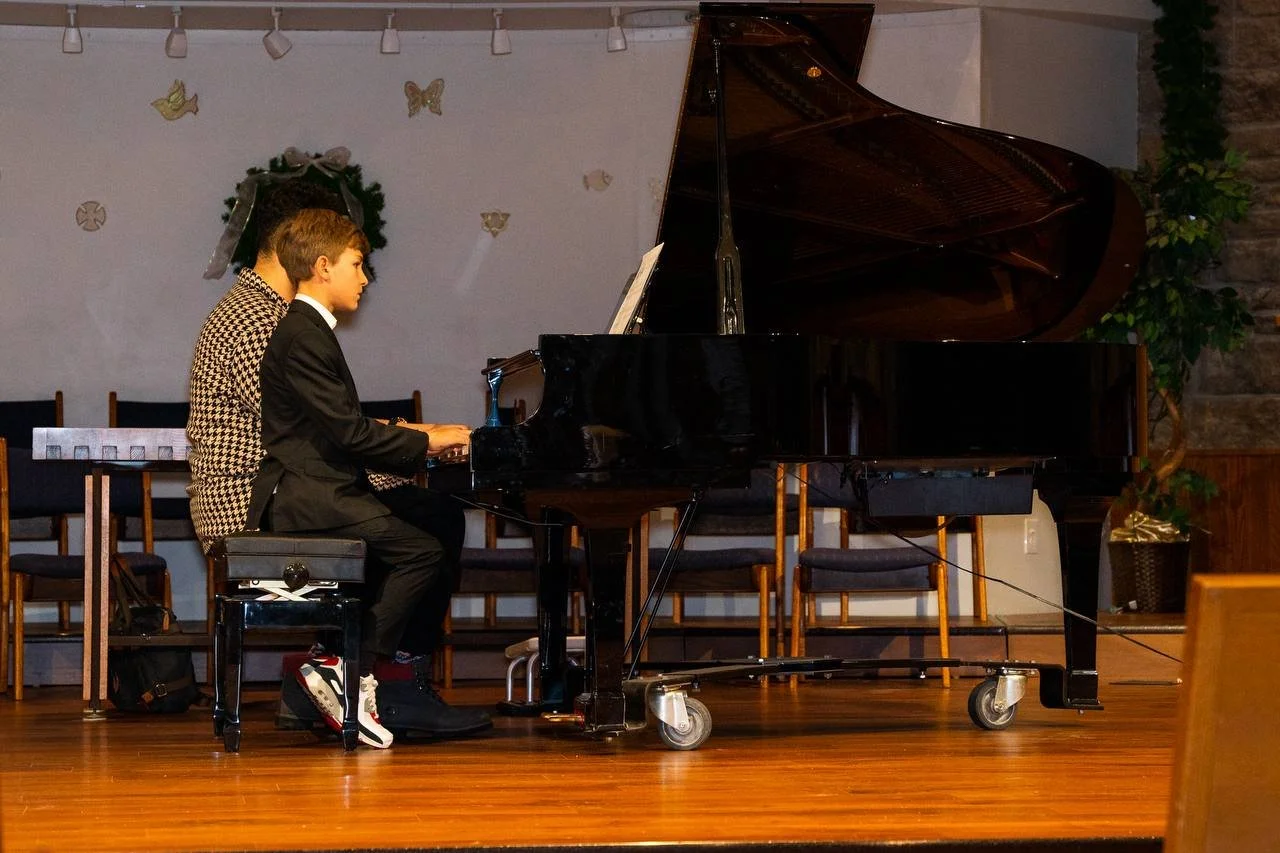
Fun and Progress Shouldn't Be Opposites
People often say children's piano lessons should be fun.
I agree.
But I think it is important to explain what that actually means.
A good piano lesson doesn't need to feel like entertainment for thirty minutes.
Scales can be difficult.
Learning to read music takes work.
A student may need to repeat the same passage several times.
Sometimes a teacher has to say:
"Let's try that again."
Children need to learn that accomplishing something difficult can be rewarding.
So when I say lessons should be enjoyable, I don't mean eliminating effort.
I mean creating an environment where the effort feels worthwhile.
Over time, your child should be developing technique, rhythm, reading skills, musicality, independence, and better practice habits.
But they should also still have some curiosity about the piano.
If lessons are always entertaining but your child isn't progressing, something is missing.
If your child is progressing technically but beginning to dread sitting at the piano, something may be missing there too.
The best teaching usually lives somewhere between those two extremes.
Read Reviews, but Read What Parents Actually Say
Reviews can be very useful when choosing a piano teacher or music school.
But I wouldn't stop at the star rating.
Read the words.
A five-star review that simply says "Great teacher!" is certainly positive, but it doesn't tell you very much.
A parent who takes the time to describe what happened over several months or years can tell you things that a teacher's résumé cannot.
Look for specific experiences.
Does the parent say their child looks forward to lessons?
Did the teacher help a shy student become more comfortable?
Did they find a way to motivate a child who had been struggling?
Do parents repeatedly mention patience?
Communication?
Reliability?
Progress?
Confidence?
One review alone doesn't tell the whole story.
But when several unrelated families keep describing the same qualities, patterns begin to emerge.
Those patterns can give you a much better idea of what working with that teacher is actually like.
Ask About Recitals and Opportunities to Perform
I also encourage parents to ask whether a teacher or music school offers recitals or other opportunities for students to perform.
Not every child should be forced onto a stage before they are ready.
Some students love performing immediately. Others need time to build confidence.
But when a student is ready, a recital can become one of the most meaningful parts of learning piano.
Think about everything that happens before a child walks onto that stage.
They choose a piece.
They practice it for weeks.
They struggle with parts of it.
They improve those parts.
They learn how to recover from mistakes.
Eventually, they walk in front of an audience and play something they worked hard to learn.
Then they hear applause.
There is something powerful about a child being able to think:
"I actually did that."
That confidence can reach far beyond the piano.
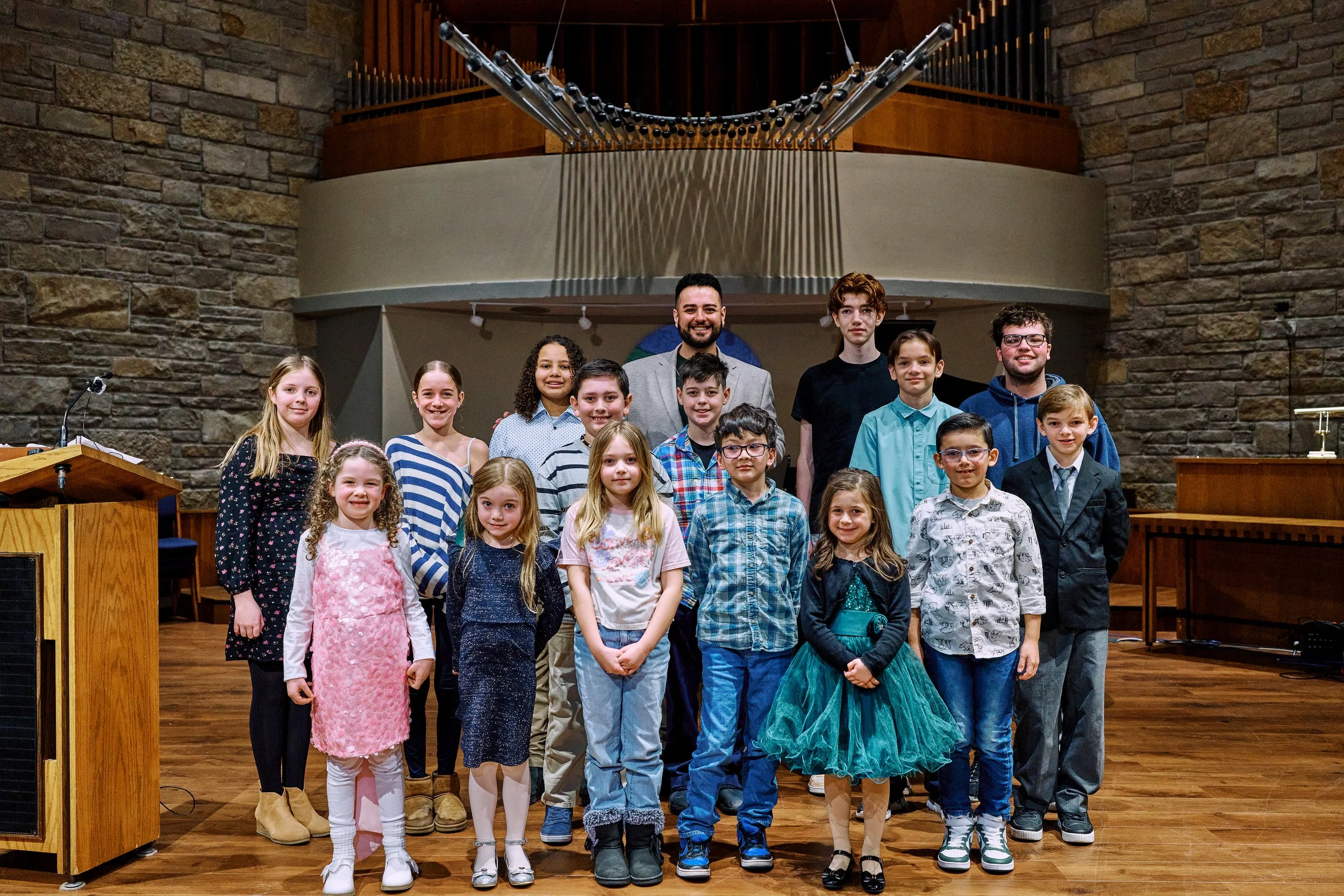
This is why student recitals are an important part of Naji Piano School. They give students a goal to work toward and an opportunity to celebrate what they have accomplished with their families.
Parents who would like to see what those experiences look like can visit our student piano recital and photo gallery.
Reliability Is Part of Being a Good Piano Teacher
Connection and teaching ability matter, but professionalism matters too.
A teacher who regularly arrives late, cancels at the last minute, forgets what a student is working on, or constantly changes lesson times makes consistency difficult.
Children benefit from routine.
Lesson.
Practice.
Progress.
Next lesson.
Of course, piano teachers are human.
People get sick. Minnesota weather creates problems. Cars break down. Emergencies happen.
One cancellation or late arrival does not make somebody an unreliable teacher.
Look at the pattern.
A professional teacher should respect a family's time just as they expect families to respect theirs.
They should arrive prepared, remember what the student has been working on, communicate when something changes, and make the student feel that their lesson matters.
How Important Are a Piano Teacher's Qualifications?
Very important.
They simply aren't the entire answer.
I would absolutely want to know about a prospective teacher's education, musical background, teaching experience, and experience working with students around my child's age.
For an advanced pianist preparing for auditions, competitions, or serious collegiate study, specialized training may become an even more important part of the decision.
But for a young beginner, I would never look at two résumés and automatically assume that the teacher with the higher degree is the better teacher for that child.
A doctorate cannot tell you whether a teacher will notice when your child is losing confidence.
A performance résumé cannot tell you whether that teacher will patiently explain the same concept a third time in a completely different way.
At the same time, a wonderful personality without enough musical knowledge isn't enough either.
Parents shouldn't have to choose between the two.
What you're looking for is:
A teacher who knows the piano and knows how to teach your child.
Questions to Ask Before Choosing a Piano Teacher
If you're speaking with a prospective teacher or music school, these are questions I think are worth asking:
What experience do you have teaching children around my child's age?
What is your musical and educational background?
How do you approach students who learn differently from one another?
How do you decide which method books or materials to use?
How will I know what my child should practice during the week?
How do you communicate a student's progress with parents?
What do you do when a student becomes frustrated or loses motivation?
Do your students have opportunities to perform in recitals?
What are your policies regarding cancellations and missed lessons?
Can my child have a trial lesson before we commit to weekly lessons?
The answers matter.
But also pay attention to how the teacher answers them.
Teaching children requires flexibility.
You can often learn quite a bit from whether a teacher seems genuinely interested in understanding your child or mainly interested in explaining their own system.
How Long Should You Give a New Piano Teacher?
There is no perfect number of lessons.
Sometimes you can tell during the first lesson that a teacher and child immediately work well together.
Other children need more time.
A naturally shy student may need several lessons before they begin speaking freely and showing their personality.
Over the first several lessons—and especially during the first one to three months—I would look at the bigger picture.
Does your child generally feel comfortable going to the lesson?
Are they learning?
Does the teacher seem to understand them better as time passes?
Are assignments clear?
Are you seeing progress?
Can you communicate with the teacher?
How does the teacher respond when something isn't working?
And perhaps most importantly:
Does your child still have some desire to sit down at the piano?
Progress doesn't need to be perfectly linear.
It rarely is.
You are looking for a relationship that seems to be moving in the right direction.
When Is It Time to Consider a Different Piano Teacher?
One difficult lesson isn't a reason to change teachers.
Neither is one frustrating month.
Students go through periods when they practice less, become discouraged, or temporarily lose motivation.
Before switching teachers, talk to the teacher.
A good instructor may already recognize the problem and have ideas for changing the approach.
But if months go by and your child consistently feels uncomfortable, lessons never adapt to their needs, communication remains poor, there is no clear direction, or cancellations and lateness have become a pattern, it may be worth trying someone else.
Changing piano teachers doesn't necessarily mean anybody failed.
Sometimes another personality or another teaching approach is simply a better match for that student.
And I think parents should feel comfortable recognizing that.
The Best Piano Teacher Is the Best Teacher for Your Child
If I could give parents only one piece of advice about choosing a piano teacher, it would be this:
Don't choose only on paper.
Read the biography.
Look at the education.
Ask about experience.
Read the reviews.
Then meet the teacher and watch what happens when that person sits beside your child at the piano.
Look for knowledge.
Look for patience.
Look for flexibility.
Look for communication.
Look for reliability.
And most importantly, look for the beginning of trust.
You aren't necessarily searching for the person who can claim to be the "best piano teacher."
You are searching for the piano teacher who is right for your child.
There is an important difference.
Finding the Right Piano Teacher in Edina and the Twin Cities
At Naji Piano School, piano isn't one of many instruments we teach.
It is the only instrument we teach.
Our school is dedicated exclusively to piano, and our instructors work with children, teenagers, and adults at different experience levels.
Families can choose piano lessons in Edina, including lessons at our Edina studio and in-home options. We also offer piano lessons in Bloomington, piano lessons in Richfield, and piano lessons in Minneapolis for families in those communities.
Regardless of where a student learns, the goal is the same:
To find the teacher and teaching approach that work best for that individual student.
That begins with a free trial lesson.
If the first instructor doesn't feel like the right match, we are happy to arrange another free trial with a different teacher.
There is no reason to force a teacher-student relationship before weekly lessons have even begun.
If you're currently looking for the right piano teacher for your child, you can contact Naji Piano School to schedule a free trial piano lesson.
Sometimes finding the right teacher takes a little searching.
I believe it is worth it.
The Naji Difference
At Naji Piano School, we’ve built our reputation on being a "screen-free" outlet that actually competes with the allure of a tablet. We aren't just a class; we are a community of instructors dedicated to making music a permanent, joyful part of your child’s life.
Whether you are looking for a classical foundation or a modern approach, we are here to help families across the Twin Cities find their rhythm.
Ready to get started?
Choosing a teacher is a big decision. We’d love to show you why so many families in the metro area trust us with their musical education.
Contact us today to schedule a consultation, and let's find the perfect instructor match for your home.